A court in Cox’s Bazar has sentenced four accused to death and nine others to life imprisonment in the widely discussed murder case of Bangladesh Army officer Lieutenant Tanzim Sarwar Nirjon.
Five accused were acquitted in the case.
The verdict was delivered on Wednesday afternoon by Judge Mohammad Abul Mansur Siddiqui of the Additional District and Sessions Judge (Fifth) Court in Cox’s Bazar.
Those sentenced to death are Md Helal Uddin, Nurul Amin, Md Nasir Uddin and Morshed Alam. Among them, Morshed Alam remains absconding. All are residents of Dulahazara union in Chakaria upazila.
The verdict drew significant attention at the courthouse, ending nearly one year and eight months of legal proceedings in one of the country’s most talked-about criminal cases.
Following the judgment, chief prosecutor Mohammad Jahangir said the young army officer had fallen victim to a brutal killing while carrying out his duty in service of the country.
“His family, the Bangladesh Army, the state and the people all expected justice to be ensured,” he said.
He added that the court had not relied solely on allegations or one-sided testimonies. Instead, it examined witness statements, evidence, surrounding circumstances and the overall facts of the case before delivering what he described as an exemplary punishment for four of the accused.
Another prosecution lawyer, Ahsan Sezan, said the atmosphere in the dock remained calm after the verdict, although the expressions and behaviour of the accused reflected “a visible sense of guilt”.
“Lieutenant Tanzim was a patriotic officer. He went there to protect people’s lives and property and to ensure public security. But he was brutally killed in the situation that unfolded,” he said.
He said verdicts in both the murder and Arms Act cases were delivered on Wednesday. Alongside the death sentences and life terms, 13 accused were also handed an additional 10 years in prison under sections 399 and 402 of the Penal Code.
Sezan said the prosecution was “reasonably satisfied” with the judgment. He noted that the judge had highlighted issues of social justice, public safety and discipline in his observations.
“The court also stressed that while ensuring punishment for the real offenders, it must equally ensure that no innocent person is convicted,” he added.
He further said the verdict was delivered after considering both the prosecution’s evidence and the defence’s cross-examinations. The full judgment regarding the five acquitted accused would be reviewed and further legal steps could be taken if necessary.
Meanwhile, several defence lawyers said they had been denied justice and would challenge the verdict before the High Court.
Tahsin Sifat, lawyer for the fifth and sixth accused, said they were dissatisfied with the ruling, particularly the life sentences and separate punishments under the Arms Act imposed on his clients.
“We believe they have been deprived of justice. Therefore, we will appeal against the verdict before the higher court,” he said.
Lieutenant Tanzim Sarwar Nirjon, 23, was killed around 1:30am on Sept 23, 2024 while conducting an anti-robbery operation in the East Maizpara area of Dulahazara union in Chakaria.
Originally from Tangail, Tanzim had been commissioned from the Bangladesh Military Academy in 2022 and was serving in the Army Service Corps. His killing triggered nationwide outrage and mourning.
Two days after the incident, Senior Warrant Officer Abdullah Al Harunur Rashid filed a murder case against 17 people over the killing and alleged robbery preparations. In a separate case, Chakaria Police Station Sub-Inspector Alamgir Hossain filed charges under the Arms Act.
Later, Chakaria Police Station Inspector (Investigation) Arup Kumar Chowdhury was assigned to investigate the cases.
After completing the investigation, police submitted charge sheets against 18 people in the two cases. Several individuals named in the original complaint were dropped due to lack of evidence, while new accused were added based on the findings of the investigation.
A humanitarian catastrophe is feared after a Malaysia-bound trawler carrying more than 250 trafficked Bangladeshis and Rohingya capsized near the Andaman Islands.
The incident came to light after nine survivors were rescued. The Bangladesh-flagged vessel MT Meghna Pride found them floating at sea and later handed them over to the Bangladesh Coast Guard.
Survivors described harrowing accounts of human trafficking and the deadly incident.
Rohingya survivor Rafiqul Islam said he was lured with a job offer from Kutupalong Bazar on April 2 and taken to a house in Rajarchhara area of Teknaf’s Kachhopia union, where he was held with 20–25 others in inhumane conditions. He said they were subjected to severe abuse whenever they tried to leave, and many houses in the area were used to detain trafficked victims.
On April 4 night, they were taken from the Marine Drive adjacent coast near Rajarchhara and boarded onto small fishing boats. At one point, they were forced to hide in the bush when a Border Guard Bangladesh patrol vehicle passed. They were later transferred in stages to a larger fishing trawler near Myanmar waters, close to Saint Martin’s Island.
More people were loaded onto the vessel, bringing the total to around 280, including 13 crew members and traffickers, 21 Rohingya women, and four children. About 150 of the passengers were Rohingya, while the rest were Bangladeshis.
After leaving the sea near Shamila on April 4, the trawler reached near the Andaman Islands on April 8. Due to rough seas, traffickers forced passengers into four cramped storage compartments meant for fish and nets. Around 25 to 30 victims reportedly died from suffocation and overcrowding. Survivors said traffickers threatened to sink the trawler if those on deck refused to move into the compartments. Eventually, the vessel capsized after being hit by large waves.
Rafiqul said he survived by clinging to a two-litre water bottle, while he could not say what happened to the others. He was rescued along with eight others on April 9 by a Bangladesh-flagged ship.
Another survivor, Md Imran from Kutupalong Rohingya camp, said he joined the journey hoping to escape camp life. “When we reached near the Andaman Sea, the trawler sank. I held onto a water tank and fought for my life for two days before being rescued by a Bangladeshi ship,” he said. “I still cannot process how many people died. Living with this memory is extremely painful. I am still unwell and have returned home through a court order.”
The Coast Guard has filed a case under the Human Trafficking Prevention and Suppression Act with Teknaf Model Police Station.
According to the case statement, the victims were being transported illegally to Malaysia on a boat named “Tanjina Sultana” when it sank due to adverse weather.
Officer-in-Charge Saiful Islam of Teknaf Model Police Station said the nine rescued individuals were brought to the station. Legal action has been taken against six traffickers, and three victims have been sent home through court orders after initial questioning.
Among the rescued, six are Bangladeshi nationals and three are Rohingya.
He said the recured persons are not telling clearly what happened to the trawler and how they were floating the sea.
“We don’t figure out how many people were there on the sinking boat”, he said. At one stage he refused to talk to this correspondent.
On the other hand, Bangladesh Coast Guard media officer Lieutenant Commander Sabbir Alam Sujan in a press release, said the vessel MT Meghna Pride, en route from Chattogram to Indonesia, rescued nine people — eight men and one woman — from the deep sea near the Andaman Islands on April 9 afternoon. They were later handed over at midnight to the Coast Guard patrol ship Mansur Ali.
The rescued individuals were identified as Md Imran, Rahela Begum, Hridoy, Sohan Uddin, Md Akbar, Rafiqul Islam, Tofayel, Sayad Alam, and Md Hamid.
On the coast of Cox’s Bazar, the waves do not always carry water. At times, they bring stories of grief, disappearance, and long, silent waiting. Along the shores of Teknaf, the sound of crashing waves now echoes with the cries of countless mothers asking, “Where is my son?”
In the narrow lanes of Shah Porir Dwip, in open fields at dusk, and along the Naf River—places once filled with children’s laughter, football games, and dreams—uncertainty now casts a shadow.
In Teknaf, nightfall brings more than darkness; it brings fear. Dreams drift away across the sea, while families remain onshore, waiting in endless anxiety and sorrow.
Anas lured into disappearance
Mohammad Anas, a 14-year-old boy from Shah Porir Dwip, was a seventh-grade student at Haji Bashir Ahmed High School. Football was his dream, and that dream led him into darkness.
Local traffickers lured him with promises of playing football abroad. He was later sold to another trafficking group for 40,000 taka and taken onto a boat, allegedly bound for Malaysia.
The last contact with his family came through a phone call. From the other end, a ransom of 300,000 taka was demanded, with threats of killing him if the money was not paid.
The family borrowed money to meet the demand. But even after three months, Anas has not returned.
“We paid the money, but did not get our son back,” said his mother, Shomuda Begum. “They took him away with promises of football. Later they threatened to kill him and took three lakh taka. Still, they have not returned my son. I went to the police, but received no justice.”
The family alleged that the accused traffickers continue to move openly in the area without effective action taken against them.
Shomuda Begum said they paid the money to relatives of a broker named Ibrahim, who is reportedly in Malaysia, through his nephew Faruk. “We paid three lakh taka, but still have not got our son back,” she said, adding that complaints were filed with police and local representatives, but no resolution has come.
Disappeared while playing
Abdur Rahman, from a modest family in North Para of Shah Porir Dwip, lived a normal life filled with laughter and dreams.
One afternoon, he went out to play and never returned.
At first, the family thought he might be with friends. But as hours turned into days, concern turned into fear.
A few days later, a call came from an unknown number. The voice on the other end said he had been trafficked to Malaysia through local brokers.
What followed was a nightmare.
His brother, Abdus Salam, said, “After taking him to Malaysia, they demanded three lakh taka. They threatened to kill him if we did not pay. We are poor people. It is impossible for us to arrange such money.”
Every day now passes in uncertainty for the family—waiting for a call, hoping for any news, staring at the door in anticipation.
Whether Abdur Rahman is still alive remains unknown.
Alarming statistics
According to law enforcement data:
From 2016 to 2025, a total of 3,134 people attempting to go to Malaysia were rescued in Cox’s Bazar. Most of them were Rohingya. A total of 115 cases were filed in Ukhiya and Teknaf police stations. Around 1,100 people were accused. About 600 traffickers were arrested.
On January 4 this year, the navy rescued 263 victims, including women and children, from the sea southwest of Saint Martin’s Island. Ten members of trafficking groups were detained.
New routes and methods of trafficking
Residents alleged that trafficking activities have recently increased around Gholar Char in Shah Porir Dwip.
According to them, the network operates in several stages.
First, local brokers target teenagers and young men, offering dreams of football careers or better jobs abroad. In some cases, victims are abducted directly while outside their homes.
Second, victims are quickly moved to hidden locations before families can begin searching. They are then taken to remote coastal points where small trawlers are prepared.
Third, under the cover of night, they are transported into deep sea, where they are transferred to larger vessels heading toward Malaysia or Thailand.
Fourth, ransom demands begin. Families said traffickers based abroad call and demand large sums of money. They threaten torture or death if the money is not paid. In some cases, victims’ cries or sounds of abuse are played over the phone to pressure families.
Fifth, even after ransom is paid, many victims never return. Some remain missing, while others are feared dead.
Investigations indicate that both local brokers and an international network are involved. Local recruiters hand over victims to overseas operatives, and ransom money is shared among them.
Families alleged that many of these traffickers have operated for years and remain beyond the reach of law due to local influence.
There are also allegations that many victims are taken by force.
Trafficking through 15 coastal points
At least 15 points in Teknaf are reportedly used regularly for trafficking under the cover of darkness, according to the reporter’s findings. A well-organized network of brokers is said to be involved.
Multiple local sources, intelligence reports, and victim accounts identified several individuals allegedly linked to trafficking networks in Shah Porir Dwip and surrounding areas. Attempts to contact the accused for comment were unsuccessful.
Police response: “Operations ongoing”
Officer-in-Charge Saiful Islam of Teknaf Model Police Station said, “Human trafficking is an international crime. We are highly active in preventing it. Regular operations are ongoing, and several suspects have already been arrested.”
He added that recent information about boats heading to Malaysia is being verified, and surveillance in coastal areas has been strengthened.
Waiting in despair
An invisible fear now grips the coast of Teknaf. Just as waves return to the shore, will the lost sons return home?
Anas’s mother still waits at the door, startled by every sound, hoping it might be her son returning. But as time passes, that hope fades.
A simple temptation, a single call—“Will you go abroad to play?”—and boys like Anas disappear.
Those small steps that left home never return. Calls come, demands come, fear comes—but the person never comes back.
On the occasion of World Health Day, a report by Bay Insight revealed a concerning picture of mental health services in the Rohingya refugee camps in Cox’s Bazar. From 2018 to February 2026, more than 240,000 Rohingya received individual counselling, while over 43,000 patients sought treatment from psychiatrists, according to data from the Médecins Sans Frontières (MSF), which provides healthcare services to Rohingya refugees in Bangladesh.
Health workers said the demand for mental health services among Rohingya continues to rise due to violence, displacement, and prolonged stress of camp life.
However, in contrast to this progress, there is no structured government mental health service or specialist doctor available for the local population in Cox’s Bazar, highlighting a worrying gap.
Rising demand at the start of the year
In January and February this year alone, 7,616 people received individual mental health counselling, while 3,593 sought psychiatric consultation in the camps.
Although the services are open to both Rohingya and host communities, the majority of patients are Rohingya.
A field-level counsellor, requesting anonymity, said, “New patients are coming every day. Many initially think they have physical problems, but later it turns out to be psychological.”
Long shadow of trauma
A large number of Rohingya who fled violence in Myanmar’s Rakhine State in 2017 continue to carry deep trauma. Uncertainty in the camps, lack of employment, and insecurity are making their mental health conditions more complex.
A resident of Kutupalong camp, using the pseudonym Rahima Begum, said, “I cannot sleep at night. Memories come back. I am always worried about my children. Sometimes I feel like I am losing my mind.”
Health workers said such experiences are no longer rare, but widespread.
Common mental health conditions
Doctors identified the most common conditions in the camps as depression, anxiety disorders, psychosis, and bipolar mood disorder.
Experts said effective treatment requires not only medication but also regular counselling and psychosocial support.
MSF’s integrated care model
Dr Ashish Kumar Das, Deputy Country Representative (Medical) at MSF, said, “Effective mental healthcare requires a combination of medication and structured counselling. We provide both through our mental health units.”
MSF units are staffed with trained doctors, clinical psychologists, and counsellors, ensuring evidence-based and integrated care.
Limited services for locals
However, mental health services for the local population in Cox’s Bazar remain limited. Superintendent of Cox’s Bazar Sadar Hospital, Mong Tin Nyo, said there is currently no psychiatrist and no dedicated mental health department at the hospital.
He said plans are underway to introduce a separate unit with psychiatrists and counsellors in the near future.
Local resident Jahangir Alam said, “We don’t even know where to go if we face mental health issues. Having such services in government hospitals would help us a lot.”
Challenges ahead
While progress in mental health services in the Rohingya camps is notable, many people still remain outside treatment. At the same time, the lack of adequate services for the host community remains a major challenge.
The situation in Cox’s Bazar highlights one clear message on World Health Day: mental healthcare is now an essential part of humanitarian response, especially for displaced and vulnerable populations.
After remaining largely inactive for nearly a year, operations at Teknaf Land Port have been officially resumed following an announcement by State Minister for Shipping, Mohammad Rajib Ahsan. However, despite the government’s decision, stakeholders have expressed concerns over security, river routes, and the practical realities of cross-border trade.
During a visit to the port on Monday (April 6), the minister said the decision to resume operations was made in response to public demand and after discussions with all relevant parties. “We have decided to restart the port’s activities from today,” he said.
He added that security would be ensured through coordinated efforts by the port authority, customs, Coast Guard, Border Guard Bangladesh (BGB), and other law enforcement agencies. Measures would also be taken to prevent the involvement of Rohingyas in port activities.
Despite the announcement, business representatives who attended the meeting said the situation on the ground is far from straightforward.
Abed Ahsan Sagar, a former director of the Cox’s Bazar Chamber of Commerce and Industry, told that security concerns were the main reason behind the prolonged suspension. “We felt that objections from security agencies, particularly BGB and the Coast Guard, played a key role. Their stance was largely negative,” he said.
According to him, the concerns include potential smuggling through the port, misuse of certain goods such as cement and rods, and broader risks linked to the border situation.
He also said discussions were held about installing security posts inside the port, a proposal opposed by business leaders due to the port’s existing legal framework.
A key proposal raised during the meeting was the installation of scanners to monitor goods. “The minister said scanners would be installed so that goods can be verified during loading and unloading. BGB can carry out inspections at gates or checkpoints if needed,” Sagar said.
However, despite the official reopening, trade activities have yet to resume.
Jasim Uddin, the port’s general manager, said the port was already operational in principle. “We are ready. Once goods start arriving, operations will begin. Only then will the real situation become clear,” he said.
Complicating matters further is the situation in Myanmar’s Rakhine State. Since December 2024, the Arakan Army has taken control of large parts of the region and established influence over the Naf River, leading to allegations of extortion targeting cargo vessels.
Business leaders said simply reopening the port will not resolve these issues.
Sagar said vessels often need to pass through Myanmar waters, forcing traders to pay various groups. “If dredging is carried out, an alternative route could be created, reducing these risks,” he said, warning that without it, the port may become inactive again.
Traders also claimed that a significant amount of money remains stuck with Myanmar businessmen “Around $9 million is held in draft form. Once goods start moving, this can be adjusted,” Sagar said.
Abu Morshed Chowdhury Khoka, a former president of the Cox’s Bazar Chamber, welcomed the decision, saying it would benefit traders by allowing cheaper imports of essentials like onions, ginger, and garlic, while also boosting government revenue.
However, he noted that the responsibility of sending goods lies with traders on the Myanmar side. “We don’t deal with the Arakan Army, we deal with the businessmen across the border,” he said.
Meanwhile, the commanding officer of Teknaf 2 BGB Battalion Lt Col Hanifur Rahman said they remain within the scope of the minister’s directives. “Security issues have been discussed and necessary steps are being taken,” he said, adding that strengthening internal security structures is underway.
Cross-border trade between Bangladesh and Myanmar began in 1995, and Teknaf Land Port was officially inaugurated on November 5, 2003, on 27 acres of land.
However, import activities effectively came to a halt after April 13, 2025, when the last timber-laden trawler arrived.
Although the government’s announcement has reopened the door, the pace of normalization in trade will depend on border security, navigability of river routes, and the situation in Myanmar.
Police have raised questions over statements made by the prime accused, Tarek, in the widely discussed murder case of Khorshed Alam, a student activist known as a “July fighter” and a member of Jatiyatabadi Chhatra Dal.
An official involved in the investigation said Tarek told police he saw co-accused Rakib and several others at the scene during the incident.
The officer questioned the claim, saying, “If he was not involved, how did he see others at the scene? Did he observe it from a distance with binoculars?
Investigators said technological analysis has provided a key breakthrough. According to officials, Rakib’s presence near the crime scene on the day of the incident has been confirmed through mobile phone location data and other digital trails. They said this information has added a new dimension to the investigation and is being treated as a vital lead in verifying his possible involvement.
Law enforcement officials said the probe is currently focused on two suspects. “Two individuals have been arrested on suspicion, and there are initial indications of their involvement,” a police official told Bay Insight, adding that the probe appears to be on the right track and is being examined further.
Investigating officer Chinmoy Barua said Tarek was arrested within 12 hours of the incident, while Rakib was detained from court premises when he surrendered in a separate case. However, neither has yet been taken on remand, and police plan to seek remand soon for further questioning.
Investigators are also examining relationships and communication patterns among those involved. A woman identified as Tarin is being discussed due to her prior contact with the victim, although no evidence of her involvement has been confirmed so far. An official said Khorshed had called Tarin before the incident.
CCTV footage from before and after the incident is being analyzed, though officials said not all details can be disclosed at this stage. Footage reviewed by Bay Insight shows Tarek near Hotel Prasad Paradise at Sugandha Point around 9:30 pm on the night of the incident. However, no footage has been found after that time, with hotel authority saying the relevant footage was deleted.
Local businessmen said Tarek was playing Ludo there for some time, though none could specify the exact duration.
A roommate of Tarek gave a different account, saying Tarek returned home after securing bail in another case, freshened up, and even danced before going out again later. He said they later went to Sugandha Point, where Tarek sat down to play Ludo with friends. The roommate claimed he later found Tarek missing and was told over the phone that he had returned home.
He also said, some members of a group known locally as ‘Fakir Group’ arrived on motorcycles looking for Tarek.
Tarek’s mother, however, claimed her son is innocent. She said he returned home after playing Ludo, ate dinner, and went to sleep. According to her, he later traveled from Cox’s Bazar to their home in Ramu that night.
Police said they are also reviewing previous criminal records of the suspects. “This group has a history of various criminal activities. Their record is not good,” an officer said.
Officials said preliminary findings suggest involvement of the arrested individuals, but no final conclusion has been reached. “Everything indicates they may be involved, but the investigation is ongoing,” an official said.
Khorshed Alam was stabbed to death around 10:30 pm on March 24 at Kabita Square in Cox’s Bazar town. He was rushed to Cox’s Bazar Sadar Hospital, where doctors declared him dead.
Police said a group of attackers surrounded and stabbed him. Tarin, who was with the victim at the time, told journalists that a group of miscreants demanded valuables before the attack, and Khorshed was stabbed following an allegation involving an attack on a person named Arif.
Officer-in-Charge Chomiuddin of Cox’s Bazar Sadar Model Police Station said witnesses and close associates of the victim are being questioned, and efforts are ongoing to identify and arrest those involved.
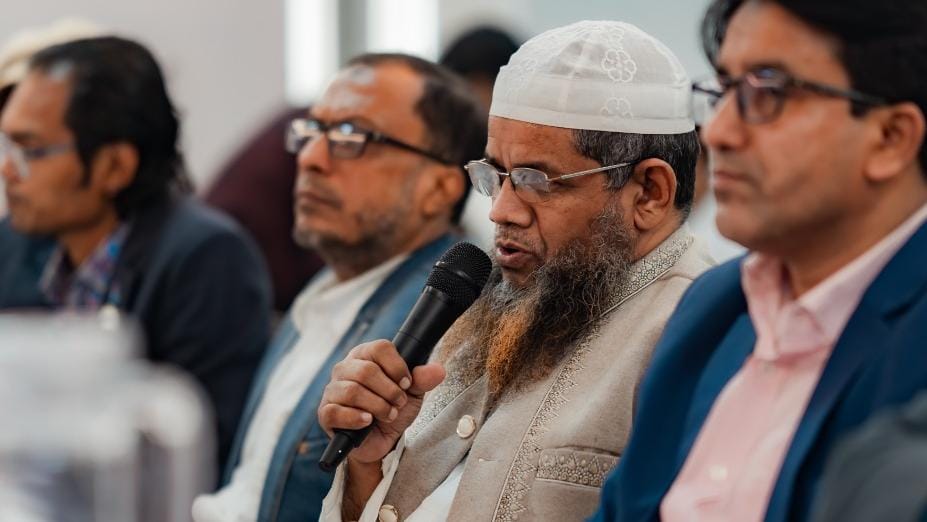
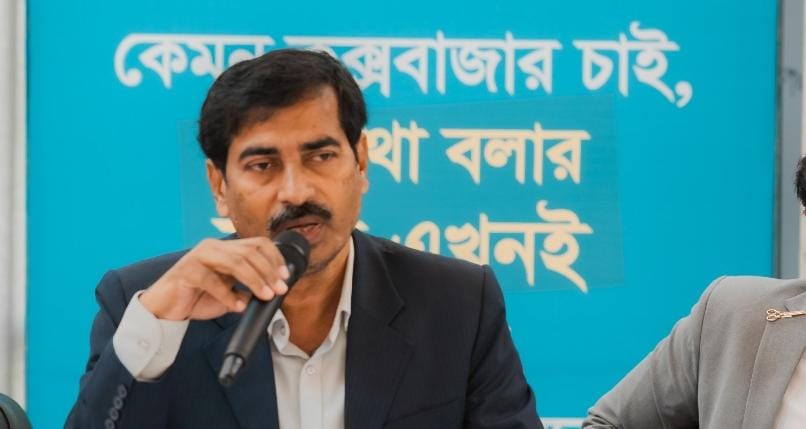
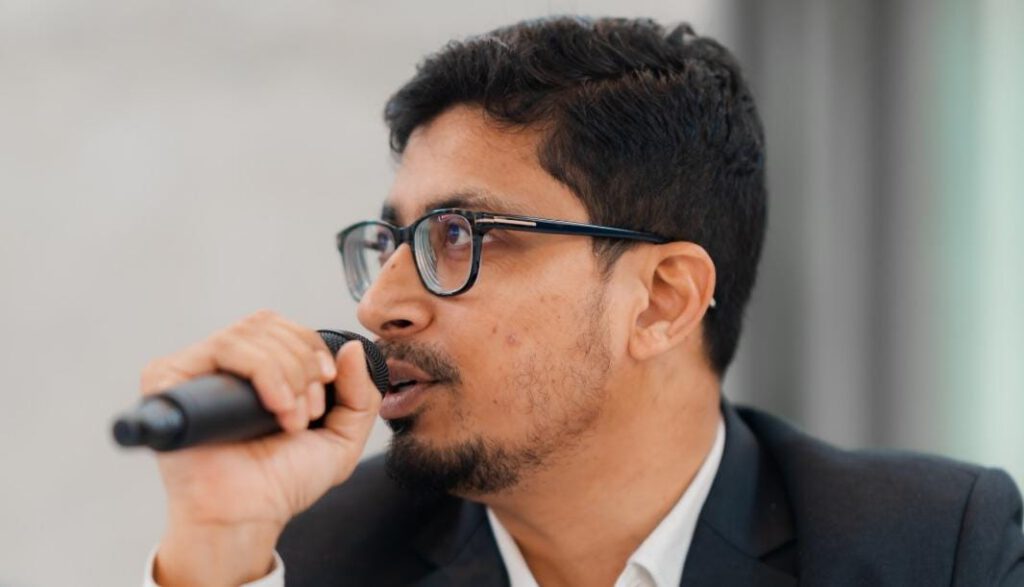
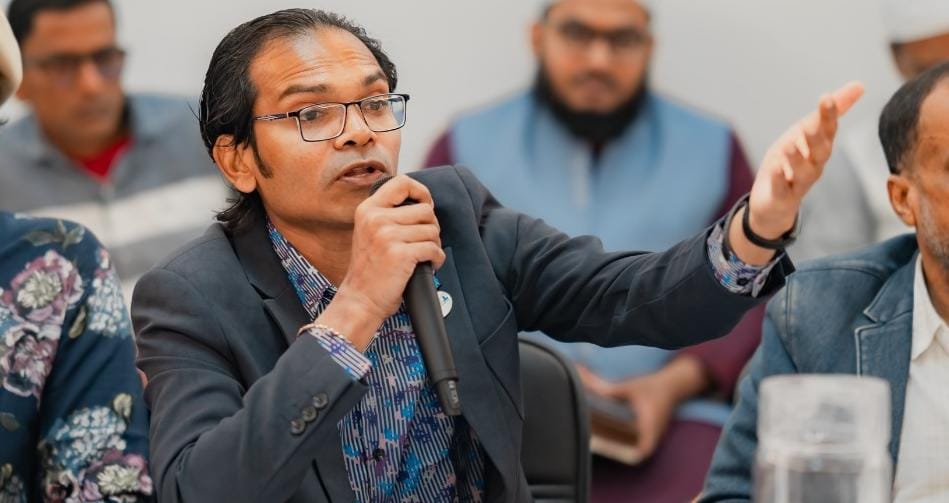
Cox’s Bazar is facing a complex reality shaped by a tourism-dependent economy, the Rohingya crisis, mega projects, weak governance, corruption, fragile infrastructure and the absence of an investment-friendly environment. At a citizens’ dialogue titled “What Kind of Cox’s Bazar Do We Want”, local entrepreneurs, politicians, lawyers, business leaders, social activists and environmentalists spoke candidly about poor planning, policy gaps and the lack of accountable leadership.
Speakers said much of what is happening in the name of development is unplanned. There is no integrated policy framework and no effective accountability, causing the country’s most prominent tourist city to gradually lose its path to sustainable development.
The citizen dialogue was held on January 24 at the DPHE WASH Conference Hall in Cox’s Bazar town organized jointly by Junior Chamber International (JCI), Cox’s Bazar and Cox’s Bazar Community Alliance, Dhaka (CCAD). Bay Insight Media Group was associated as the research and analysis partner at this event.
—– No Money Exchange Houses in the Tourist City, Investors Face Serious Difficulties
Cox’s Bazar Community Alliance (CCAD) member Shah Newaz Chowdhury said that despite being an international tourist destination, Cox’s Bazar does not have a single proper money exchange house.
“Go anywhere in the world, in any tourist destination, you will see exchange houses on every road. But I have not seen any in Cox’s Bazar. If foreign investors come, how will they exchange dollars?” he said.
He added that in reality such services are being informally provided beside hotels, in small shops or even at bus counters. Without proper government oversight, structural improvements are impossible, he said. “There is no policy here, yet everything is happening in an unplanned way. By the time policies are formulated, everything may already be ruined,” he added.
—– Absence of Rule of Law, Crisis of Integrity the Core Problem
Senior lawyer Mohammad Jahangir said the core obstacle to solving Cox’s Bazar’s problems is the absence of the rule of law and integrity. “Those who speak loudly into microphones and make laws do not follow the law themselves,” he said, pointing to social double standards such as anti-smoking events attended by smokers and anti-drug programmes led by people reeking of alcohol. “When leaders speak against corruption but practice it themselves, why would ordinary people follow the rules?” he asked.
He also questioned the lack of female representation, saying commitments such as ensuring five percent women candidates are not being honoured. Addressing political aspirants, he said they must publicly pledge that they may lose elections, but will not allow democracy or the rule of law to lose, otherwise free and fair elections will remain impossible.
——- Mega Projects Taken Over by Outsiders, Local Entrepreneurs Left Deprived
Cox’s Bazar District Bar Association President Syed Alam said that if things continue as they are, even another 20 to 40 years will not bring real development in Cox’s Bazar. He recalled proposing in 2004 that the tourism sector be handed over to local entrepreneurs, a suggestion that was ignored. “Now we see large mega projects being taken over by outsiders. Corruption has occurred, driven by the percentage interests of powerful groups,” he said.
On the Rohingya issue, he warned against what he described as international conspiracies, saying that granting Bangladeshi passports would strengthen Myanmar’s claims. ——– No Solution to the Rohingya Crisis Without a Stake in Rakhine
NCP Cox’s Bazar General Secretary Omar Faruk said the opportunity to use a humanitarian corridor to resolve the Rohingya crisis was missed. “The problem is in Rakhine. To solve it, Bangladesh must have a stake there,” he said, noting that China and India have expanded their influence in Rakhine since 2017. Without pragmatic diplomacy, reopening the Teknaf land port will not be possible, he added. ——- Development Impossible Without Honest Leadership
Jamaat-e-Islami Cox’s Bazar district General Secretary Jahedul Islam said the country has lacked accountable governance for decades. “Those who have ruled over the past 54 years have siphoned off thousands of crores of taka abroad and looted banks. That is why honest leadership is essential,” he said.
——-
Cox’s Bazar’s Potential Lies in the Salt Industry
Cox’s Bazar Women Chamber of Commerce and Industry President Jahanara Islam said that still asking what kind of Cox’s Bazar people want reflects collective failure. She said salt is the district’s biggest industry, yet no industrial transformation has taken place. “The key to our fortune is in our own hands,” she said, urging development of local resources instead of waiting for foreign investment.
—- Development in Maheshkhali, Yet Locals Left Deprived
Environmental activist M Alam said residents of Maheshkhali have given up land for national development projects but have received little benefit in return. He also raised concerns over the lack of transparency in the Matarbari Development Authority.
——
Corruption Is the Biggest Obstacle
Red Crescent President Riaz Mohammad Shakil said corruption remains the biggest barrier to progress. “We talk a lot, but we vote for corrupt people. Corruption is the main obstacle to development,” he said.
—- Call for Planning Beyond Party Lines
Islami Andolon Cox’s Bazar President Muhaddis Amirul Islam Mir said everyone wants a beautiful Cox’s Bazar, but management has failed. “We must work beyond party lines,” he said.
—— Hospital Mismanagement and Black Money in Elections
Politician and cultural organiser Ashraful Huda Siddiqui Jamshed highlighted mismanagement in public hospitals, saying patients are often forced to lie on floors despite the possibility of improving facilities. He also questioned the role of black money in elections. “If it costs Tk 100 million to contest an election, how can someone remain honest after coming to power?” he asked.
—— Demand to Expand Land Port and Highway to Four Lanes
Cox’s Bazar Chamber of Commerce and Industry Vice President Sheikh Ashiquzzaman said Bangladeshi traders have around $9 million stuck in Myanmar banks. He demanded the immediate reopening of the Teknaf land port and upgrading the Chattogram–Cox’s Bazar highway to four lanes. “Deaths happen on this road every day. This is a demand for our lives,” he said.
Mizanur Rahman Milky, Tourism Entrepreneur
“Young entrepreneurs have invested in St. Martin’s, but they are unable to recover their investments. Currently, 90 percent of land in St. Martin’s and most of the Kolatoli zone in Cox’s Bazar is owned by people from outside the region.
Therefore, the government should implement land management policies—there should be limits on how much land outsiders can buy, similar to what we see in hill areas. Otherwise, there will come a time when Cox’s Bazar will no longer belong to its own people.
Also, tourists visiting Cox’s Bazar will not buy Chinese goods; they will purchase products made by local people. It is essential to create such initiatives.”
Hedayet Aziz Mithu, Organizer, Cox’s Bazar Community Alliance (CCAD)
“Salt production is one of the main sources of income for the people of Cox’s Bazar. But who is managing this sector? Currently, the price of salt has dropped to half of the minimum production cost, and yet approvals are being given for imported salt.
What is BSCIC doing? The salt industry should be removed from BSCIC’s control. BSCIC is not patronizing this sector in any meaningful way. The current stock of salt is enough to last for the next two years.
If this situation continues, no one will go to the salt fields in the future. Who is stopping people from producing salt with such effort?”
Mohibbul Moqtadir Tanim, Chief Coordinator, Cox’s Bazar Community Alliance (CCAD)
“Although Cox’s Bazar plays a significant role in international geopolitics and the economy, local communities’ participation in development processes is far from satisfactory.
With this responsibility in mind, CCAD has been organizing continuous dialogues in Dhaka over the past two years, involving representatives from both the government and civil society. Ahead of the parliamentary elections, these inclusive dialogues were held to provide practical guidance to elected representatives.
He added that without coordinating development projects with environmental conservation, Cox’s Bazar will face serious risks in the future.”
Monowar Kamal Zisan, President, JCI Cox’s Bazar
“Large projects are underway in Cox’s Bazar. But the key question is—who are these developments for? The real issue is how much they ensure local people’s employment, quality of life, and safety.”
Panic has spread among residents of Whykong border areas in Teknaf Upazila of Cox’s Bazar after a landmine explosion along the Naf River left a young man with his leg blown off, amid allegations that Myanmar’s Arakan Army crossed into Bangladesh and planted mines inside Bangladeshi territory.
The explosion occurred on Monday in the Lambabil area of Whykong Union, Teknaf, near the embankment along the Naf River. The victim, Mohammad Hanif, 28, a resident of Lambabil, lost his leg in the blast.
He is now undergoing treatment at Chattogram Medical College Hospital.
Local residents said the landmine had been planted by members of the Arakan Army after intense fighting with Rohingya armed groups on the Myanmar side of the border. According to them, heavy clashes broke out early Sunday at Totar Dwip in Myanmar, opposite Whykong, involving gunfire, explosions and drone attacks.
They said many members of Rohingya armed groups fled across the Naf River into Bangladesh to save their lives, and were chased by the Arakan Army. During the pursuit, Arakan Army fighters allegedly crossed the Naf River and advanced up to the embankment inside Bangladesh, planting a large number of landmines in the process.
Diladar Mia, who was with Hanif at the time of the blast, said that on Monday morning, believing the situation had calmed, Hanif, Diladar and Selim Sheikh of Unchiprang went towards the Naf River to check their boat and fishing nets.
Diladar said they crossed the embankment at Lambabil and walked about one kilometre towards the river through land that is used as shrimp enclosures during the monsoon. As they neared the river, a sudden explosion threw Hanif to the ground.
“We immediately became alert and later noticed that several more landmines had been planted around us,” he said. “Small landmines were buried just under the soil and covered with grass or debris.”
Despite being terrified, they managed to rescue Hanif and return safely, he said. “Now we are too afraid to go back to that area. Thousands of people living along the border depend on the Naf River for fishing and crab catching. We are all living in fear.”
Hanif’s brother, Anwar Hossain, alleged that Arakan Army members chased Rohingya armed group fighters up to the embankment on Monday and opened fire from there, during which a Bangladeshi child, Huzaifa Afnan, 9, was shot.
“They planted at least 300 landmines inside Bangladeshi land while leaving. One of those blew off my brother’s leg,” Anwar said.
The Totar Dwip area across the Whykong border is known as a stronghold of the Arakan Rohingya Army (ARA), also known as Nabi Hossain’s group. Clashes between the Arakan Army and Rohingya armed groups have been ongoing there for several days. On Sunday, many fighters reportedly fled into Bangladesh under heavy Arakan Army attacks.
Border Guard Bangladesh detained 53 people for illegal entry following the clashes, BGB Ramu Sector Commander Colonel Mahiuddin Ahmed said on Monday.
In the past, landmines were planted along the border by Myanmar’s junta forces, causing multiple Bangladeshi casualties. After seizing control of the entire 271-kilometre Bangladesh-Myanmar border following prolonged fighting with the junta in December 2024, the Arakan Army is also alleged to have continued the practice, including planting mines along the zero line.
However, locals say this is the first time landmines have been planted after crossing the Naf River, which separates the two countries, deep inside Bangladeshi territory.
Attempts to contact Ramu Sector Commander Colonel Mahiuddin Ahmed for comment were unsuccessful, as he did not answer repeated phone calls or respond to text messages detailing the incident.
According to BGB data, at least 65 Bangladeshis have been injured by landmines since fighting broke out between Myanmar’s government troops and the Arakan Army early in 2024.
Two Rohingyas were killed by landmines in 2024, and five others were injured in 2023.
A Bangladeshi child who sustained a bullet injury amid heavy fighting across the Myanmar border is being transferred to the National Institute of Neurosciences and Hospital in Dhaka for specialised care.
Chattogram Medical College Hospital Director Brigadier General Taslim Uddin said on Tuesday that surgeons were unable to extract the bullet after hours of complicated surgery, as it is lodged in a highly sensitive area of the brain. He said attempting to remove it could put the child’s life at serious risk, leading doctors to refer the patient to the Dhaka-based neuroscience hospital. “They can manage the case better,” he said.
The child was hit during cross-border clashes between the Arakan Army and Rohingya armed groups that began around 11:00pm on Saturday and continued until about 10:00am on Sunday in the Totar Dwip area on the Myanmar side, opposite Whykong union in Teknaf, Cox’s Bazar. Continuous gunfire and explosions were reported during the fighting. At one point, a bullet fired from across the border struck the child. Huzaifa is a resident of the Teschi Bridge area of Whykong.
The condition of Bangladeshi child Huzaifa Afnan, who was injured by a bullet fired from across the Myanmar border, remains critical. The child is currently receiving treatment at the Intensive Care Unit (ICU) of Chattogram Medical College Hospital.
Huzaifa’s uncle, Md Shawkat, said doctors conducted a CT scan late Sunday night and later performed surgery. However, they were unable to remove the bullet. Shawkat said doctors told the family that the child’s condition is extremely critical and that the bullet is lodged inside the head. Attempting to remove it at this stage could be life-threatening, they said.
The child was shot during clashes between the Arakan Army and Rohingya armed groups along the Myanmar border in Teknaf, Cox’s Bazar. The fighting began around 11:00pm on Saturday and continued until about 10:00am on Sunday in the Totar Dwip area on the Myanmar side, adjacent to the Whykong Union border. Continuous gunfire and sounds of explosions were reported during the clashes.
At one stage of the fighting, a bullet fired from across the border struck the child. Huzaifa is a resident of the Teschi Bridge area of Whukong.
Cox’s Bazar Additional Superintendent of Police Alok Biswas confirmed the incident to The Daily Star on Sunday. Speaking later in the afternoon, he said the injured child had been taken to Chattogram Medical College Hospital.
“There were initial reports that the child had died, but that information is not correct,” Alok Biswas said.